Fake Sweat, Real Receipts: The Rigged Spontaneity Behind America's 'Raw' Brand Photos
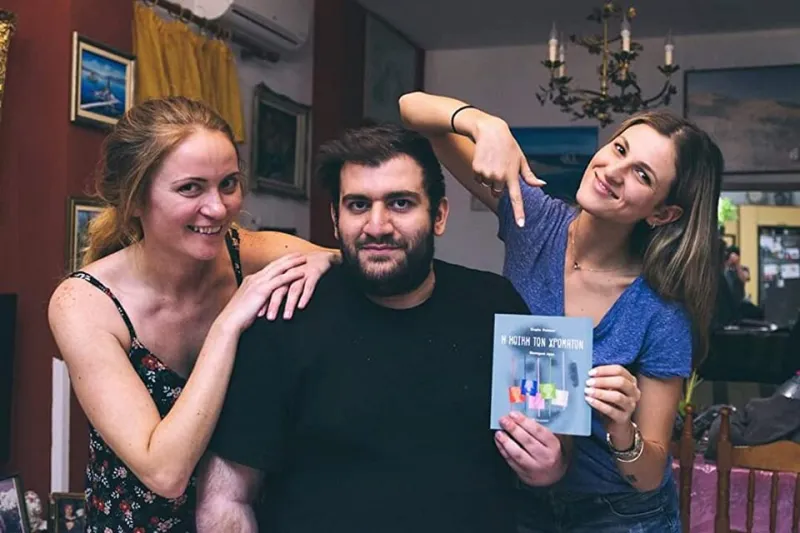
Photo: ChristosArfanis, CC BY-SA 4.0, via Wikimedia Commons
There's a photo you've seen a hundred times this year. A mechanic in a fitted coverall, forearms smudged just so, caught mid-laugh in a garage that's suspiciously well-lit for a place where people actually work. The caption in the deck called it "candid." The invoice called it a two-day production with a casting director, a grip truck, and a makeup artist whose entire job was applying dirt.
Let's say the quiet part loud: there is no such thing as a raw brand shoot. There are only raw-looking brand shoots, and every one of them was storyboarded within an inch of its life.
The Sweat Was Ordered in Advance
I've sat in enough pre-pro meetings to know how the sausage gets made. The "spontaneous" frame of the runner doubled over on the track? That's shot 14 of a scheduled sequence, blocked after lunch, with a hydronebula mister parked just off-camera to fake exertion. The stubble on the "just rolled out of bed" guy? Applied with a stipple sponge by someone with a union card and a steady hand.
None of this is a scandal, exactly. Control is what production is for. You don't hand a client a five-figure invoice and then cross your fingers that something interesting happens in front of the lens. You engineer the interesting. You cast the face, dress the set, rig the light, and then — this is the crucial part — you instruct your talent to pretend none of it exists.
The lie isn't the photo. The lie is the word "raw."
Rebellion Is a Product, and Somebody Manufactures It
Here's the uncomfortable truth the industry doesn't put on its mood boards: audiences don't actually want unpolished. They want the feeling of unpolished, delivered with the consistency and reliability of a polished product. Chaos on demand. Grit with a call sheet.
Look at the brands that built their identity on anti-polish — the workwear labels, the craft breweries, the truck ads shot on handheld with visible lens flare. Every one of those images passed through the same approval gauntlet as the glossiest cosmetics campaign. The flare was added in post or created with a flag and a 2K. The handheld shake was a stylistic choice, rehearsed. The "found" location was scouted by a location manager who got paid to find the most photogenic version of nowhere.
Rebellion, as it appears in American advertising, is a genre. And genres have rules. The rules just happen to involve looking like you're breaking them.
The Audience Can Smell the Setup
So does this bother anyone? Increasingly, yes.
People have developed a kind of production-value sonar. They can clock a "real customer" testimonial shoot because the lighting is too good. They know the diner scene was shot at 10 a.m. on a Tuesday with three extras. The same internet that made grain fashionable has also made audiences fluent in its tells — and fluent in the smugness of brands who think grit is a costume you can rent.
The failure mode isn't that the photo was staged. It's that the staging is lazy. Fake sweat on a model who's never changed a tire. A dive bar dressed by someone who's only seen dive bars in movies. That's the stuff that curdles. The audience doesn't resent craft; they resent condescension — the assumption that they can't tell the difference between lived-in and set-dressed.
What Honesty Actually Looks Like Behind the Camera
So what's the move? Not confessionals in your ad copy. Nobody wants a brand to interrupt the image with "by the way, this was lit." The honesty we're talking about happens upstream of the frame.
It looks like casting people who actually do the thing. If your mechanic doesn't wrench on weekends, the smudge is just makeup, and audiences feel that in their bones even if they can't articulate why.
It looks like locations with a pulse — shooting in the actual diner on an actual Tuesday morning, eating the chaos of real life rather than recreating a souvenir version of it. Real places fight back. That friction reads as truth.
It looks like letting the subject co-author the image. The best "candid" frames I've ever seen happened because someone in front of the camera brought something the storyboard never predicted — and the director had the nerve to keep it.
And it looks like admitting, internally at least, that spontaneity is a budget line. When your team knows the rawness is a construct, they stop pretending it isn't and start making better decisions about what kind of construct it is.
The Flare Is a Lie. Make It a Good One.
Every photograph is a lie — a frozen, curated, lit-and-blocked lie. This has been true since the daguerreotype. The question was never "staged or not staged." The question is whether the lie is told with respect for the audience or with contempt for them.
A lie told well — grounded in real people, real places, real textures — is called storytelling. A lie told lazily is called a stock photo. Audiences can't always define the difference, but they click away from one and linger on the other, and no amount of fake stubble changes the math.
So storyboard it to death. Rig the light, cast the face, schedule the sweat. Just make sure that somewhere under all that engineering, something true is actually happening — because the lens flare can be a lie, but the pulse can't be.