The Poles Stay: A Retouch Policy for Brands That Want to Be Believed
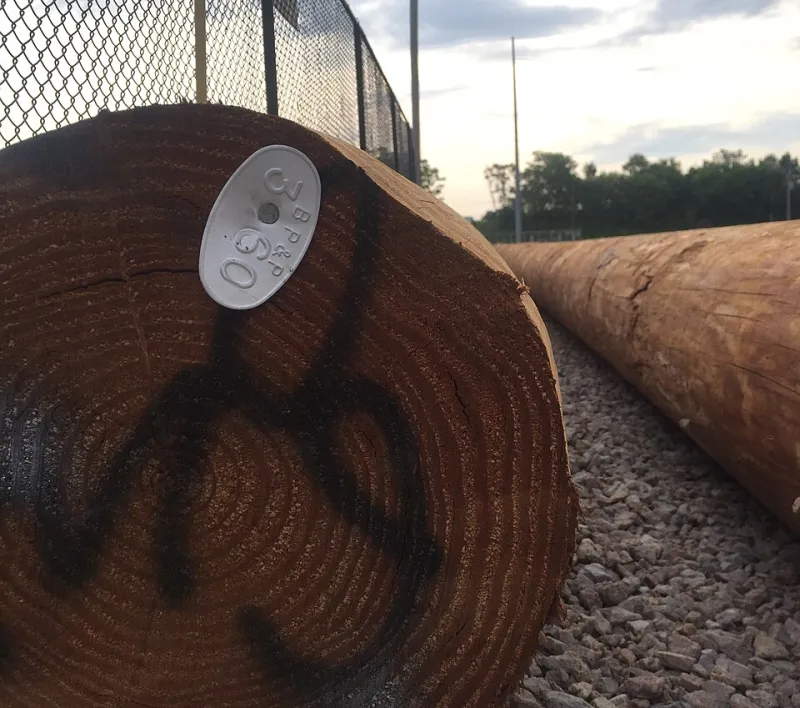
Photo: Schickdavid3, CC BY-SA 4.0, via Wikimedia Commons
I sat in a review once and watched a retoucher spend forty minutes removing a utility pole from a photograph of a corner store. When she finished, the image was cleaner. It was also completely anonymous. You could not tell what state it was in, what decade it was in, or why anyone had bothered to photograph the building at all.
Somebody in the room said it looked more premium. What it looked like was a rendering.
The Village With No Wires
The instinct to clean up a location is old and mostly innocent. Clients see clutter. Planners see distraction. Retouchers see a Tuesday. So the wires go, then the dumpster, then the curb paint, then the crack in the sidewalk, and by the end you have a photograph of a place that has never existed and could be anywhere.
That is not a small loss. Infrastructure is the fingerprint of a real town. Overhead lines mean the neighborhood is old enough to have been retrofitted. A painted curb means somebody cared enough to enforce parking. A sagging dumpster lid means people live there. Strip all of it and you strip the evidence, and evidence is the whole reason a viewer believes an image.
Audiences are not stupid about this. They have grown up watching brands sand down their own locations, and they have learned to read a suspiciously empty street as a message: this company does not want to be associated with the place it shot in.
What Erasure Actually Costs
Three things, generally.
- Trust. A frame with real clutter in it reads as documentary. A frame without it reads as advertising. If your brand's entire claim is that it is not like the other brands, you just deleted your proof.
- Specificity. Regional texture is free authenticity and it is nearly impossible to fake. The light, the poles, the storefront lettering, the particular gray of a city sidewalk — that is the difference between an image that belongs somewhere and an image that belongs on a stock site.
- Cost and time. Every object you remove has to be removed everywhere. It compounds across a campaign, and the budget you spent cloning out a fire hydrant is budget you did not spend on another shoot day.
The Clutter You Should Never Clone Out
Here is the short version of the policy I hand to clients now.
Keep the verticals. Utility poles, street signs, parking meters, light posts. A pole in the foreground is a framing device. It creates depth, it dates the street honestly, and it tells the eye that the camera was standing somewhere real.
Keep the lines. Wires, laundry, flags, a clothesline, a chain across a driveway. Overhead wires are the single most recognizable American streetscape element outside of a strip mall. Leave them.
Keep the ground. Curb paint, storm drains, manhole covers, stains, gouges, the ghost of a parking stripe. Ground detail is what makes a product look placed instead of dropped.
Keep the wear. Peeling paint, rust streaks, taped signs, a patched window. Wear is a timestamp. It says this thing has been used, which is exactly what you want a product to look like.
Remove only what would confuse the product. That means a random logo that is not yours, a license plate, a visible face without a release, a competitor's packaging, a safety issue. Function, not vanity.
Where Retouching Still Belongs
This is not an argument against the retoucher. It is an argument for a retoucher with a brief that says no. Clean up the things that are genuinely errors — a light stand in frame, a sensor dust spot, a wrinkle that is pulling focus from the product. Fix the color. Match the campaign. Crop like you mean it.
Just do not turn a photograph of a place into a photograph of an idea of a place. Those two things are not the same asset, and only one of them makes anybody feel anything.
The Policy, in One Line
If the object would still be there on a Tuesday afternoon when nobody is watching, leave it in the frame.
The pole is not hurting your campaign. The pole is the reason anyone believes your campaign happened in a real town with real people and a real sun coming through the wires at 3 p.m. Take it out and you get a clean image nobody remembers. Leave it in and you get something a person might defend in an argument.
That is a better trade than any amount of cloning.