Undo, Undo, Undo: What Your Editing Timeline Says About How Much You Trust Your Own Brand
Every photographer has seen it. You deliver the shots, the client is thrilled, and then three weeks later the images come back from "the team" looking like they were run through a beauty filter from 2014. Skin like porcelain. Skies that no sky in the contiguous United States has ever produced. A storefront so scrubbed of dumpsters and power lines it could be a rendering.
Nobody says it out loud, but everybody knows what happened. The brand got nervous.
The History Panel Doesn't Lie
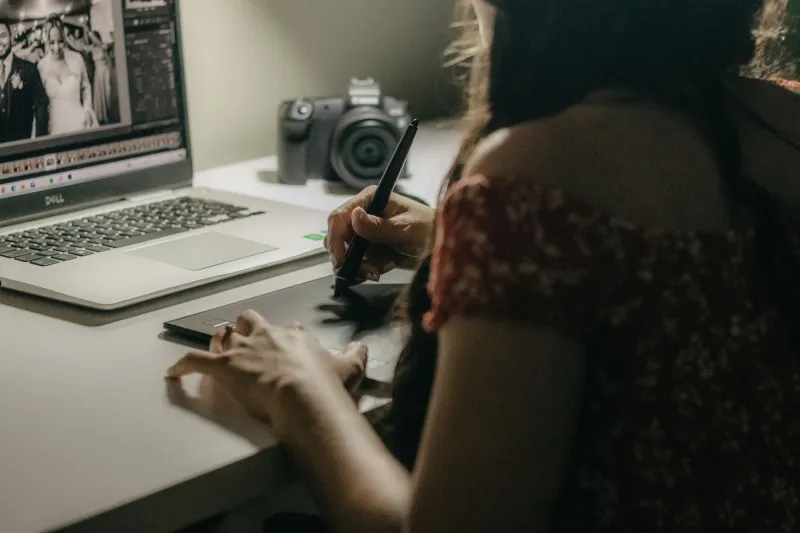
Here's the thing about editing software: it keeps receipts. Every Lightroom catalog has a history log, a running tally of every adjustment, every undo, every panic-induced slider drag at 11 p.m. before a launch. And if you want to know how a company actually feels about itself, don't read the brand guidelines. Read the timeline.
A confident brand makes a handful of deliberate moves — contrast here, a crop there, done. An insecure brand makes two hundred. It smooths the founder's hands. It clones out the honest shadow. It replaces a real Midwest sky with a tropical gradient that screams "we wish we were somewhere else." The edit history is a diary of doubt, one brushstroke at a time.
And Americans can smell it. We grew up on advertising; we have a built-in fraud detector calibrated over decades of infomercials and airbrushed magazine covers. When an image looks too clean, our brains file it under "someone is hiding something" faster than you can say authenticity.
The Over-Edit Hall of Fame
Not all industries sweat equally. Ask any working photographer and you'll get the same unofficial rankings.
Real estate and hospitality lead the league by a mile. The HDR-stacked, window-pulled, lawn-greened listing photo has become its own genre of fiction. The reasoning is always the same — "we're selling a dream" — but the effect is a nation of travelers who arrive at hotels wondering if the booking site committed fraud.
Fitness and wellness run a close second, which is rich, given the whole pitch is transformation. Apparently the before-and-after isn't dramatic enough without liquifying reality a little further.
Corporate America broadly over-edits out of fear of the legal department and the HR department and the one board member who doesn't like shadows on faces. Every image goes through committee until it's been sanded down into beige.
The industries that edit least? Craft brands, restaurants with actual lines out the door, and outdoor companies whose product genuinely lives in the dirt. When you have something real, you don't need to retouch the rust.
Enter the One-Take Photographers
Which brings us to the most interesting trend in commercial photography right now: shooters who are charging a premium to remove the safety net entirely. One take. No re-shoot clause. Raw files delivered as-shot, with a contract stating the client gets what the sensor got.
It sounds like a gimmick until you watch it work. These photographers are selling certainty — not the certainty of perfection, but the certainty of honesty. The pitch to the client is essentially this: if you need fifteen rounds of retouching to love your brand imagery, the problem isn't the photography.
And the clients signing up aren't renegades. They're mid-sized American companies — a boot maker in Portland, a coffee chain in Nashville — who realized that every hour spent cloning out reality was an hour spent apologizing for who they are. The one-take shoot is expensive precisely because it forces a decision: do you trust your product in daylight, or don't you?
Editing Isn't the Enemy. Hiding Is.
Let's be clear: editing is craft. Ansel Adams dodged and burned in the darkroom. Color grading is not a sin. There's a canyon of difference between finishing an image and falsifying one.
The tell isn't that you edited. It's what you edited. Fixing exposure is competence. Erasing the tattoo off your barista's arm because someone in legal got antsy is fear. Replacing a gray Ohio sky with a Caribbean gradient tells your customer you think your own story isn't good enough as it happened.
And here's the uncomfortable math: the audience that matters most — the ones who buy, share, and defend — consistently rate the slightly flawed, honest image higher than the polished one. The crumb on the table. The lens flare. The real sky over the real highway.
The Assignment
So here's a challenge for any brand reading this: open your last campaign's edit history and just look at it. Count the moves. Ask what each one was protecting you from.
If the answer is "taste," carry on. If the answer is "shame," you've found the actual creative problem — and no amount of frequency separation is going to fix it.
The camera never lies. But your edit log testifies. The only question is whether you like what you said under oath.