Nobody Frames a Gaffer: Confessions From the Crews Who Save Rebellious Shoots
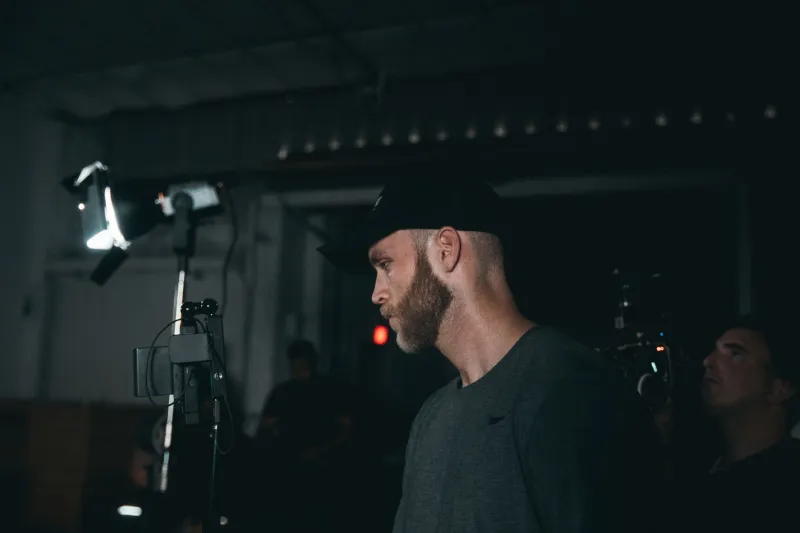
There's a specific moment on every set that never makes the final edit. It's the moment right before the shutter clicks when everything is about to fall apart — and then doesn't, because a grip wedged a C-stand into a wind gust, or a gaffer re-rigged a busted softbox with gaffer tape and a prayer. The image comes out looking effortless. Nobody claps for the stand.
We spent a few weeks calling around — Los Angeles, Chicago, Nashville, a barn outside Portland — asking working crew members one question: what's the wildest set you ever saved? The answers were better than any case study we could've invented.
The Light Didn't Come. The Show Went On.
Dana Reyes, a gaffer with fifteen years of commercial shoots under her belt, remembers a desert shoot outside Joshua Tree where the rental truck showed up with the wrong generator — half the power the lighting plan called for.
"The creative director wanted this huge, defiant backlit silhouette at golden hour," she told us. "We had maybe a third of the fixtures. So we bounced the sun. Literally used the thing everybody was complaining about as the key light and shaped it with two flags and a truck windshield shade."
The campaign ran nationally. Nobody in the client meeting asked how it was lit. That's the job.
Gear Hacks From the People Who Actually Know
Ask any first assistant about studio rentals and you'll get a look. The consensus: most of what a rental house charges you for, a crew can build, borrow, or improvise in an afternoon.
A few favorites we heard:
- The shower curtain softbox. A PA's white vinyl shower liner over a window frame turned a motel room in Memphis into a passable beauty studio for a band's album press shots.
- Car headlights as rim light. A grip in Detroit parked the van behind the subject for a streetwear look when the battery pack died. "Cops stopped twice," he said. "Both times they ended up in the shot."
- Home Depot diffusion. Rosco and Lee gels are great. So is a roll of frosted window film and a couple of clamp lights when the budget dies on day two.
- The apple box everything principle. Riser, seat, table, doorstop, counterweight. If a set is missing something, the answer is almost always an apple box.
None of this shows up in the invoice as "creative problem solving." It shows up as the reason the client rebooked.
The Rebel Myth Needs a Rewrite
Here's the part that might sting a little: the lone-wolf photographer myth is mostly marketing. The image of the solitary visionary, refusing notes, bending the world to their lens — sure. But talk to the people standing ten feet off set, and a different picture emerges.
The most defiant work we've covered on this site — the no-permit roadside shoots, the anti-style-guide campaigns, the grainy anti-gloss stuff — all of it had crews. Real ones. People who knew where the light would fall before the photographer asked, who could feel a rig failing before it failed, who could read a director's mood from across a parking lot.
"The photographers who scare me are the ones who call themselves rebels and then micromanage every stand," Reyes said. "That's not rebellion. That's insecurity with a light meter. The genuinely brave ones hand you the vision and trust you to catch it."
Trust, it turns out, is the most punk-rock thing on a set. Anybody can yell. It takes actual nerve to let your gaffer change your lighting plan because they saw something you didn't.
Credit Where the Credit Isn't
There's a structural problem here worth naming. Credits roll for photographers. Sometimes for stylists. Almost never for the crew. The grip who invented the windshield-shade solution will never appear in a case study. The assistant who talked a nervous small-business owner through her first shoot — the difference between a stiff portrait and an actual human face — is invisible in the final frame.
A few shops are fixing this. Crew credits on the website. Assistant names in the caption. One Chicago studio we heard about pays a "saves bonus" — a flat cut to whoever solves the biggest on-set problem of the day. It's cheap. It's smart. And it acknowledges the truth every working crew member already knows: the image is a team sport wearing a solo costume.
So the next time you see a brand photo that feels dangerous — that looks like it shouldn't have been allowed, that makes a strip mall in Ohio feel like cinema — remember that somebody taped a gel to a clamp light at 6 a.m. to make it happen. Somebody stood in the rain holding a flag. Somebody read the room so the photographer could read the light.
Rebellion looks effortless because people worked very hard to make it look that way. Frame them sometime.