Exit 47 Has Better Light Than Your Studio: Chasing American Cool Through the Sprawl
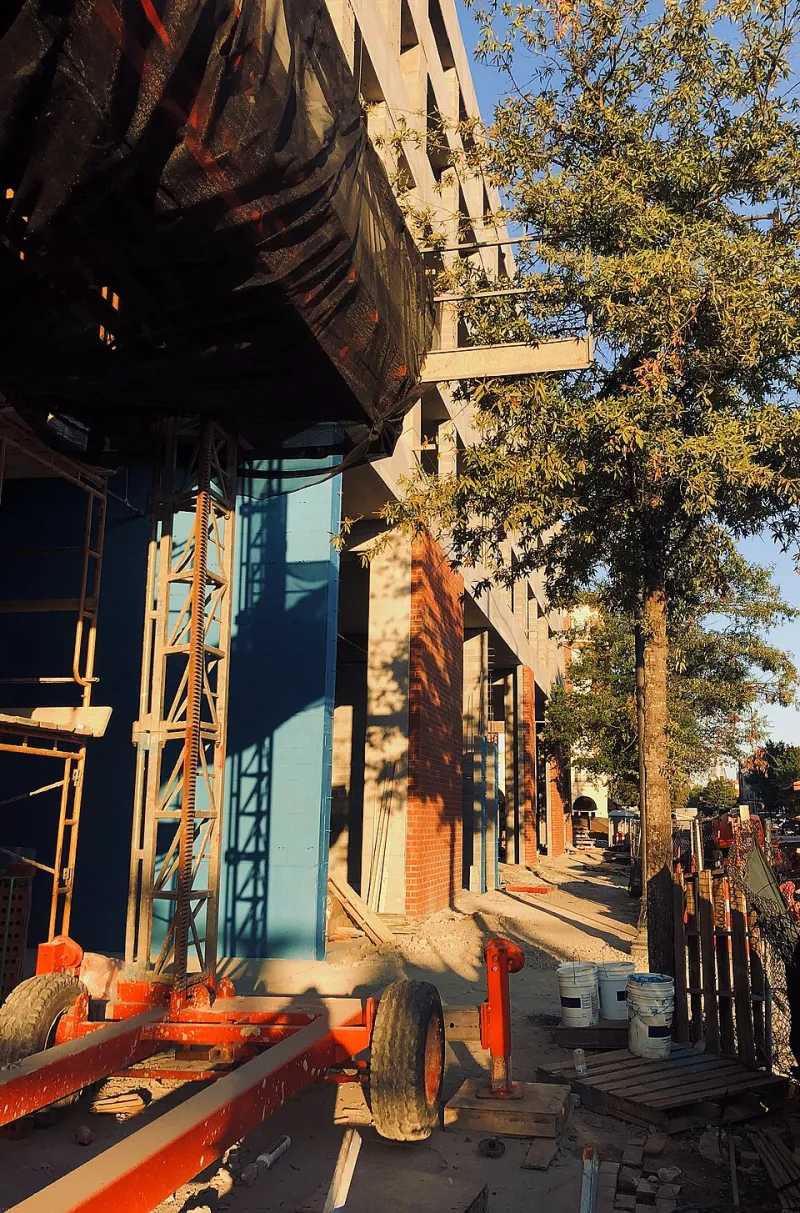
Photo: jalexartis, CC BY 2.0, via Wikimedia Commons
There's a moment every photographer who's traded the studio for the strip mall knows well. You're crouched behind a rack of discounted pool floats at 6:40 p.m., the sun doing that thing it does over a Jersey highway — turning a beige expanse of asphalt into something closer to a Rothko than a parking lot — and you realize: nobody's paying rent for this light. It's just here. Free of charge, next to a CiCi's.
For years, the industry treated locations like this as a compromise. If you couldn't afford the beach house or the downtown loft, you shot the strip mall. But somewhere in the last few years, the math flipped. The strip mall stopped being the consolation prize and became the whole point.
The Studio Sold Us a Lie About Where Beauty Lives
Studio work has its place — control, consistency, a ceiling that doesn't leak. But the studio also flattens. It strips context. A model holding a product against a seamless backdrop could be anywhere, which means they're effectively nowhere. And audiences have gotten fluent in that nowhere-ness. They scroll past it the way you tune out elevator music.
The sprawl, on the other hand, comes pre-loaded with story. A truck stop at dusk says something a white cyclorama never will. It says somebody stopped here. Somebody's driving through the night. There's a coffee and a long haul and a whole interior monologue baked into the frame before your subject even steps in.
That's the difference between a backdrop and a setting. Backdrops hold things. Settings hold meaning.
Where the New Geography Actually Is
Talk to shooters who've made the pivot and you'll hear the same shortlist over and over:
- Big-box parking lots at golden hour. The wide, empty asphalt acts like a giant natural bounce card. Bonus: the sodium-and-LED mix of parking lot lighting after sundown is a color grade you can't fake.
- Laundromats and 24-hour diners. Fluorescent overheads, window glare, vinyl booths. It's a lighting kit you don't have to rent.
- Highway overpasses and roadside signage. Scale, geometry, and typography all in one frame.
- State fair midways, hardware store aisles, car washes. Anywhere the ordinary gets a little theatrical after dark.
None of this is new to documentary photographers — they've known for decades that the everyday is the most photogenic country on earth. What's new is brands catching up. The work that stops the scroll right now doesn't look like a fantasy. It looks like a place you've actually been, which is exactly why it earns a second look.
Americana Is a Differentiator — Until It's a Costume
Here's where the rebellion needs a disclaimer. There's a version of this trend that's already curdling: the art-directed "authentic" diner shoot with a vintage truck rented by the hour and a wardrobe department that's never set foot off the coasts. Audiences can smell the difference between documenting a place and decorating with it.
The rule of thumb I give every creative team: if your location doesn't change how the shot behaves — the light, the color, the body language of the people in the background — you didn't shoot on location. You shot on a set shaped like one.
Real sprawl photography means real conditions. Power lines in frame. A cashier who wanders into the edge of your shot and improves it. Weather you didn't order. That friction is the texture. Sand it off and you're back to the seamless backdrop, just outdoors.
A Quick Field Guide for Your First Sprawl Shoot
- Scout at the hour you'll shoot. A parking lot at noon is a different animal than the same lot at 7 p.m. Don't trust a daytime recce for a dusk setup.
- Ask before you shoot on private property. Most small business owners will say yes if you're polite, offer to tag them, or buy something. Some of the best collabs of the year start at a register.
- Work with the ambient palette, not against it. If the sign is green and buzzing, let it be green and buzzing. Fighting the location is how shoots go over budget and under soul.
- Leave room for accident. Block less. Direct less. The sprawl supplies the weird; your job is to not direct it out of the frame.
- Shoot the place before you shoot the product. Spend twenty minutes photographing the location like a tourist. You'll find the angles nobody art-directed.
The Interstate Doesn't Care About Your Brand Guidelines
That's the final appeal, really. The suburban edge is indifferent to your mood board, your style guide, your three rounds of client notes. It was here before the campaign and it'll be here after. Shooting in it forces a kind of humility that studio work never demands — and audiences read that humility as honesty, and honesty as cool.
Cool used to be somewhere else. Somewhere coastal, somewhere expensive, somewhere with a view. The last decade blew that up. Cool, it turns out, was at the truck stop the whole time, waiting under a buzzing sign for someone to point a camera at it.
Exit 47 is coming up. The light's about to be perfect.