2.0 Megapixels of Truth: The Flip Phone Aesthetic Is Winning American Advertising
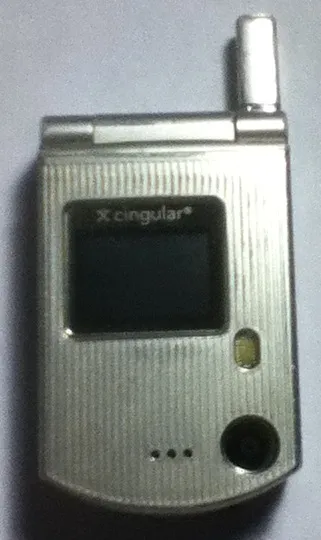
Photo: Collin Knopp-Schwyn, CC BY 3.0, via Wikimedia Commons
There's a moment happening right now in commercial photography that would've gotten you laughed out of a pitch meeting five years ago: a brand budgeting thousands of dollars to make a photo look like it was taken by a Kyocera with a cracked screen.
VHS tracking lines. Camcorder timestamps burned into the corner. That weird digital smearing you used to get texting a photo to your cousin in 2006. It's all back, and it's not a nostalgia fluke — it's a strategy. And honestly? It's working.
The Trust Problem With Perfection
American audiences have been trained — by us, by every studio and agency in the country — to treat polish as a lie. A hyper-clean hero shot with perfect rim lighting and a color grade approved by committee reads, instinctively, as an ad. And people scroll past ads the way they change lanes to avoid a state trooper.
But a grainy, slightly blown-out image shot on something with a fraction of a megapixel? That reads as a moment. Something that happened. Something somebody caught before it got away.
The psychology is simple: nobody fakes a flip phone photo. Or at least, that's the assumption. Which means the ugliest image in your carousel might be the most credible thing your brand owns.
Bad on Purpose Is a Full-Time Job
Here's what nobody tells you about deliberate lo-fi: it's not lazy, it's expensive.
Getting a photo to look authentically awful requires controlling everything that makes a photo good. The lighting has to be wrong in a specific way. The compression artifacts have to land where real early-2000s compression would put them. The timestamp font has to be period-accurate, because audiences can smell a filter slapped on in post the same way they can smell a focus group.
The crews doing this well are obsessives. They're hunting thrift stores for actual working camcorders, sourcing CRT monitors for playback artifacts, testing how a real 1.3-megapixel sensor handles a diner at 2 a.m. The imperfection is engineered. The spontaneity is scheduled.
And that's where the line lives — the line between calculated imperfection and just phoning it in. One is craft. The other is an excuse. If your lo-fi image looks bad in the same way every other brand's lo-fi image looks bad, you didn't take a risk. You bought a preset.
The Rebellion Is in the Restraint
At Rebel Vision, we've spent a lot of pixels arguing that brands should take real swings — shoot in real places, cast real faces, kill the mood board. The lo-fi wave is the same instinct wearing a different jacket. It's a refusal to blend in, except this time the weapon is a worse camera instead of a better one.
There's something almost poetic about it. The industry spent twenty years chasing resolution, dynamic range, sharpness you could shave with. And the audience responded by trusting the blurry thing more.
Why? Because sharpness became the uniform of the corporate. When everything is crisp, crisp means nothing. A little digital noise is the visual equivalent of a cracked voice — it signals a human was behind the lens, even when a whole team was.
How to Do It Without Getting Caught Faking
If you're a brand eyeballing this trend, a few field rules:
Use real lo-fi tools, not lo-fi filters. Shoot on the actual device. The artifacts that come from a genuine cheap sensor are chaos — and chaos can't be faked convincingly in a plugin.
Commit all the way. Half-lo-fi is the worst of both worlds: a beautiful photo with a timestamp slapped on it. If you're going ugly, go all the way down.
Match the aesthetic to the story. A flip phone photo makes sense for a nostalgia play, a youth brand, a product with roots. It makes no sense for a luxury watch. Context is everything — wrong context and it reads as a midlife crisis.
Earn the grain. The best lo-fi campaigns pair the aesthetic with genuinely unpolished subjects — real locations, real people, real light. The camera choice and the honesty have to match, or the whole trick collapses.
The Camera Never Mattered Anyway
The dirty secret of commercial photography is that audiences never cared about your glass or your sensor. They cared whether the image felt true. Every leap in camera technology just gave brands new ways to dress up the same old lie.
So maybe the flip phone revival isn't a trend at all. Maybe it's the audience finally saying the quiet part out loud: we don't trust your perfection, show us something that looks like it happened.
The worst camera in the room won because it stopped pretending. That's not a gimmick. That's the whole job.