Seven Corners of America That Outshoot Any Seamless Backdrop
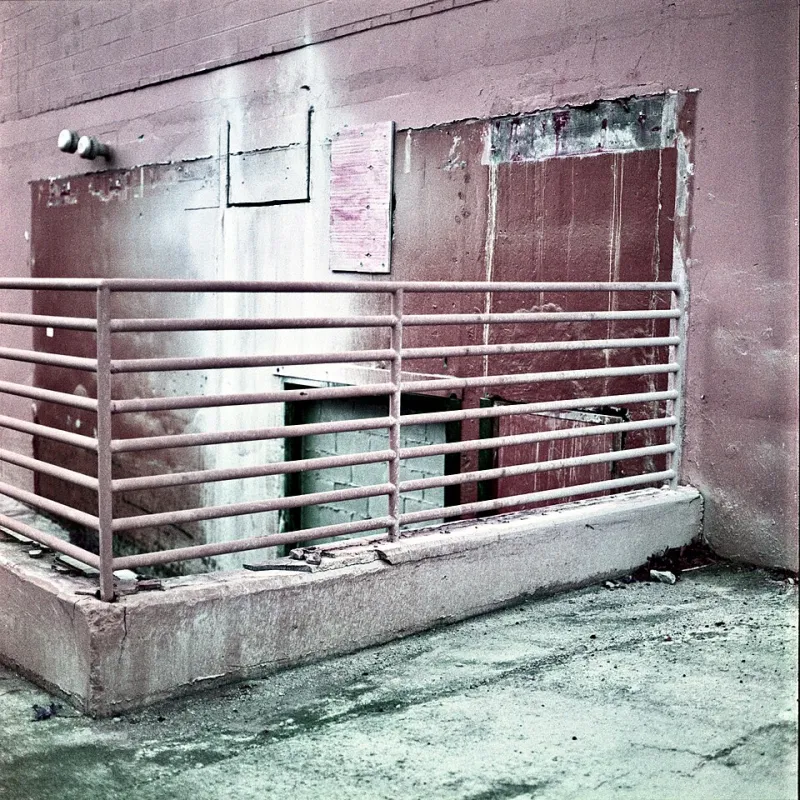
Photo: Tom Mills, CC BY-SA 2.0, via Wikimedia Commons
There is a room somewhere in every American city with a curved white wall, a roll of seamless paper, and a client standing in the middle of it wondering why the images feel like a bank website. The cyc wall is not the problem. The problem is that it removes every piece of evidence that the product has ever existed anywhere.
These seven locations are free, ugly, and available in almost every town in the country. Bring a camera, one light, and a willingness to be seen loitering.
1. The Loading Dock
What is there. Concrete, a rubber bumper strip, a scuffed roll-up door, a yellow-painted stripe that used to mean something, and usually a pallet or two nobody moved.
How to light it. Put the subject against the door and bounce a single strobe off the concrete floor. The dock is a natural light scoop — it will throw fill back up at your subject from below whether you ask it to or not.
Why the mess earns it. A loading dock says the product arrived. It came off a truck, got stacked, got signed for. That is a more persuasive sentence than any hero angle on white.
2. The Laundromat Vestibule
What is there. Fluorescent tubes, a wall of dryers behind glass, linoleum with a shine nobody polished on purpose, and a paper sign taped at eye level.
How to light it. Shoot the tubes as they are. If they flicker or go green, let one side stay green — mixed color temperature is the signature of a real interior. Add a small LED as a fill only if the client's brand color is on the packaging.
Why the mess earns it. Fluorescents smell like Tuesday. Nobody stages a laundromat. If your brand sells anything that gets used on a normal day, this is the room it lives in.
3. The Auto Parts Counter
What is there. A laminated counter, a rack of belts behind it, a hand-written price board, and a guy who has been there since 1994.
How to light it. One bare bulb overhead. Add nothing. Ask permission, buy something, and shoot the counter at an angle so the inventory stacks into a background with depth.
Why the mess earns it. Expertise you cannot fake. A parts counter signals that the product is for people who fix things, not people who talk about fixing things.
4. The Chain-Link Corner
What is there. A fenced lot, a sagging gate, a faded sign on the fence, and asphalt that is doing its best.
How to light it. Put the sun behind the fence and shoot through it. The mesh becomes a pattern over your subject. Bring a black flag to knock down bounce from the lot if the frame goes flat.
Why the mess earns it. Chain-link is the visual shorthand for 'we are out here.' It also creates instant foreground texture, which is something no backdrop can give you for free.
5. The Back Porch With the Screen Door
What is there. Painted wood, a screen with a dent in it, a chair that came from somewhere else, and light pushing through in a shape you could not design.
How to light it. Shoot into the porch from outside. The screen acts as a diffusion panel and adds a grid to everything. Let the doorframe cut the composition.
Why the mess earns it. The screen door is the most American foreground object there is. It means somebody lives here. Products look better when they appear to belong to someone.
6. The Gas Station Air and Water Island
What is there. A hose on a coiled arm, a scratched sign with instructions, a concrete pad with a stain shaped like a continent, and light coming from every direction at once.
How to light it. Do not. Shoot it at 3 p.m., stop down, and let the hard sun do the work. The hose and the sign give you foreground, midground, and a shadow all in one frame.
Why the mess earns it. It is a place where things get handled. No brand has ever tried to look cool here, which is why it still looks like something.
7. The Self-Storage Corridor
What is there. Roll-up doors in a row, orange drive-up lights, bare concrete, and a receding vanishing point that goes on longer than you expect.
How to light it. One strobe at the far end. Let the corridor go dark toward camera. The symmetry is free; the mood comes from the falloff.
Why the mess earns it. Repetition with grit. It is graphic and emptied out at the same time, and it makes a product look like it has somewhere to be.
The Rule Behind the List
None of these places are special. That is the point. A backdrop says 'we paid for a room.' A loading dock says 'we went outside and found something true,' and the audience can feel that difference in about a quarter of a second.
Before you book the stage, walk two blocks. The better set is almost always the one with the pallet on it.