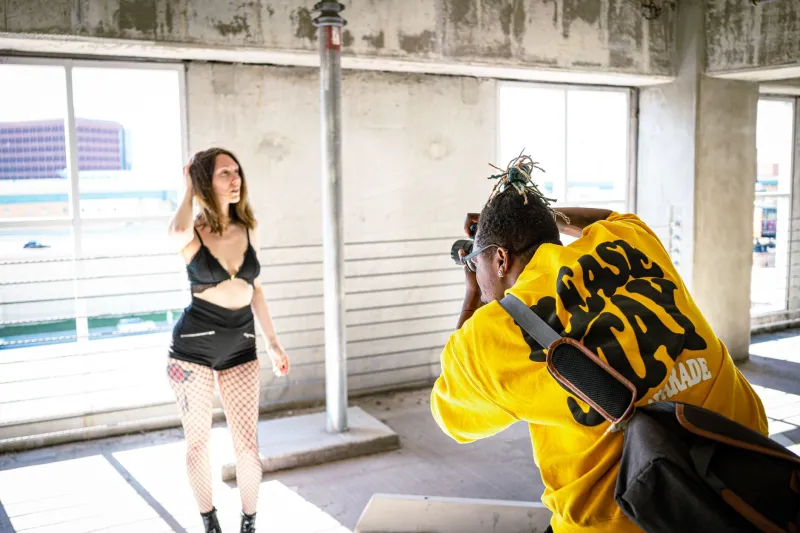
Zero Dollars, Million Views: Anatomy of the Organic Image Hit

There's a particular kind of heartbreak in watching a $200,000 studio campaign pull 400 impressions while a blurry phone photo of a gas station sign pulls two million shares. If you've lived it, you know the feeling. If you haven't, consider this your heads-up.
The dirty secret of visual marketing is that production value and shareability are barely correlated. Sometimes inversely correlated. Understanding why is the difference between brands that spend money on attention and brands that earn it.
Why Polish Can Be a Liability
The human brain runs constant background scans for authenticity signals. Perfectly lit, art-directed imagery triggers one response: this is an ad. And ads get scrolled past on reflex.
Imperfect imagery triggers something else — the pattern match for 'a real person captured this real thing.' That's the pattern that stops thumbs. It's the same reason a friend's vacation photo outperforms a tourism board's hero shot. We're wired to trust peers over pitchmen.
Five Organic Hits, Dissected
1. The accidental landmark photo. Think of the endlessly reposted shots of everyday American places — a neon motel sign in the desert, a diner at golden hour, a bizarre roadside attraction. Nobody shot these for a brand. They spread because they hit a sweet spot: familiar enough to recognize, specific enough to feel like a discovery. Lesson: specificity beats generic beauty. 'A diner in Gallup, New Mexico at 6:47 a.m.' travels further than 'cozy restaurant interior.'
2. The employee-behind-the-scenes shot. When a bakery worker posts flour-dusted hands pulling a tray from the oven at 4 a.m., that image routinely outperforms the brand's polished product photography. It works because it shows cost — real labor, real hour, real person. Lesson: show the work, not just the result. Audiences reward effort with attention.
3. The weather moment. Every time a storm rolls through, images of a half-collapsed inflatable tube man or a snow-buried storefront go nuclear. Brands that capture their own location in a wild weather moment — quickly, imperfectly — borrow the virality of the event. Lesson: speed beats quality. A same-hour phone photo beats next-week's retouched version every time.
4. The honest-fail photo. A burnt batch, a misprinted sign, a delivery mishap — brands that post their own mistakes with humor consistently see engagement rates that polished posts never touch. It works because self-deprecation disarms the ad-detection reflex. Lesson: a little vulnerability buys enormous trust. Just make sure the fail is small and the fix is visible.
5. The hyper-local flex. Photos that could only exist in one place — a specific skyline, a regional food, a local quirk — get shared as identity badges. People repost them to say this is where I'm from. Lesson: give your audience something to be proud of, and they'll do your distribution for free.
The Budget Playbook
So how do you engineer for this without engineering the life out of it? A few working rules:
- Shoot like a person, not a brand. Phone camera, available light, real environments. If it looks like an ad, reshoot it.
- Build a fast lane. Create a process where one trusted person can post within the hour. Virality has a half-life measured in hours, not days.
- Document, don't stage. Point the camera at what's already happening — the team, the process, the regulars. Staged authenticity reads as fake from a mile away.
- Lean into place. Name the town. Show the zip code. Local pride is the cheapest distribution network in America.
- Let the caption breathe. Over-explaining a photo is the visual equivalent of laughing at your own joke. Say less.
The Real Investment
None of this costs money. What it costs is ego — the willingness to publish something that looks less impressive than your competitor's ad and trust that real beats shiny.
The images that spread without a single dollar behind them share one DNA strand: they feel found, not fabricated. Your job isn't to manufacture that feeling. It's to put yourself where the real moments happen, camera ready, ego in check — and hit post before the doubt sets in.