Blue Ribbons, Bad Shade, Real Faces: Shooting the Fairground Like It Matters
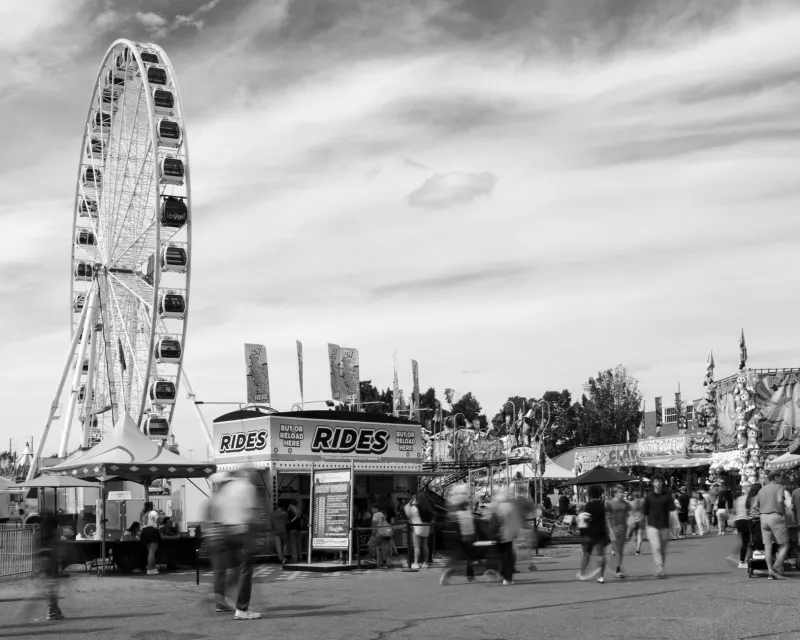
American brands keep renting warehouses and filling them with fake hay. Then they wonder why the images feel like a catalog for a life nobody lives. The county fair is sitting right there: loud, sweaty, badly lit, and absolutely alive. If you want rebellious imagery, stop treating the fair as a novelty backdrop. Treat it as a set.
Why the fair beats the studio
The light is bad and honest. The faces are not cast. The color is not art-directed. The chaos is composition. A fairground gives you everything a studio tries to fake, and it gives it to you without a mood board. You just have to show up with a camera and enough humility to not make the place look like a joke.
This is not poverty tourism. It is not a hunt for grit. It is a working community event with its own rules, and the images only work if you respect them.
The field guide
1. Chase the bad shade
The midway is a masterclass in hard light. Striped tent shadows, blown highlights, fluorescent barns, sunset bouncing off a Ferris wheel. Do not soften it into a studio look. Let the shade cut across a face. Let the sun blow out the edge of a frame. That is the texture clients say they want and then get scared of in the edit.
2. Shoot the hands
A 4-H kid holding a ribbon. A vendor tearing a ticket. A ride operator wiping grease on a rag. Hands tell the truth faster than a face. They also give you detail shots that feel like the place, not like a brand pretending to be there.
3. Let the background win
Every studio shoot blurs the background into beige nothing. At the fair, the background is the story. Prize pumpkins. A tractor pull. A wall of stuffed animals. Do not kill it with a wide-open lens. Stop down. Let the place crowd the frame. That is what makes the image feel American instead of generic.
4. Follow the noise
Demolition derby dust. A livestock auctioneer. A carnival barker. The fair is a soundstage with no soundstage. Move toward whatever is loud and slightly out of control. That is where the frames with a pulse live.
5. Eat the food
Funnel cake, corn dogs, lemonade in a paper cup. These are not props. They are real objects with real grease and real hands around them. Shoot them like they matter. A brand that can make a corn dog look honest can probably make its own product look honest too.
6. Ask first
This is the one that keeps you from being a problem. Ask before you photograph people. Explain where the images will run. Get releases when you need them. Pay people for their time if you are building a campaign on their face. Do not make a fairgoer the punchline of your edgy brand post. Real faces are not texture. They are people.
7. Stay past golden hour
The fair changes after sunset. Neon on the midway. Fluorescent light in the barn. Dust in the air. The crowd gets tired and honest. That is when the best frames happen. Do not pack up when the light gets weird. The weird light is the point.
8. Bring wipes
Dust, grease, and animal barns are part of the deal. Protect your gear. Clean your lens. Wear boots. This is a field shoot, not a lobby shoot.
The ethics of shooting real people
A fair is not a zoo. You are a guest. Introduce yourself. Ask questions. Use a local crew if you can. Share images back with the people who gave you time. Avoid the cheap move of making rural America look like a costume. The second you treat people as background, the images go dead. Respect is not a limitation on the work. It is what makes the work good.
A sample half-day route
Arrive before the gates open and shoot setup: vendors stacking cups, animals being groomed, rides being tested. Shoot the harsh midday light around the barns and the food stalls. Take a break when the sun is flat. Come back for the late afternoon crowd and stay through dusk. Build a shot list, then leave room for the thing you did not plan. Bring one camera and one lens if you can. A giant crew kills the room.
What to tell the client
Tell them this is not a cute county fair shoot. It is proof of life. It is the antidote to the warehouse with the fake hay. If they want safe, they can rent the studio. If they want images that feel like America actually looks, go where the funnel cakes are. The fair does not need your brand. Your brand needs the fair.