Six Ways Your Daring Photo Shoot Becomes a Courtroom Drama
Nothing kills a killer frame faster than a lawyer with a highlighter. The edgiest shoots — rooftop sessions, street portraits, that abandoned warehouse with perfect light — are exactly the ones stacked with legal landmines nobody briefed the creative team about. This isn't a lecture against pushing boundaries. It's a map of where the boundaries actually are, so you can push the right ones.
1. The Missing Model Release
The rule of thumb most photographers learn the hard way: if an image is used to sell something, you need a signed release from any recognizable person in it. Editorial use is one thing; a brand campaign is another entirely. That stranger who wandered through your frame and made the shot? If their face ends up on a billboard, they have a claim.
The fix is boring and effective: carry releases, get signatures on-site, and for crowd scenes, post signage and shoot wide enough that no one is identifiable. Minors require a parent or guardian's signature — no exceptions, no "they seemed fine with it."
The cautionary tale is well-worn for a reason: brands have paid six-figure settlements over a single candid that went from portfolio to paid media without anyone asking permission. One signature, one minute, problem prevented.
2. Trademarked Backdrops Playing Co-Star
You framed the shot around that iconic neon sign, and it looks incredible. It also looks like an endorsement. When a protected logo or trade dress is prominently featured in commercial imagery, courts can read it as implying affiliation — and the trademark holder's legal team reads it that way too.
You've got options. Get permission (many businesses will happily trade a shot for a tag). Rework the composition so the mark isn't the hero. Or lean into generic urban texture — weathered brick, peeling paint, anonymous signage — that gives you the same grit without the letterhead.
3. Drones Without Paperwork
Aerial shots are the fastest way to make a brand look expensive, and the fastest way to earn a fine from the FAA. Commercial drone operation in the US requires the pilot to hold a Part 107 remote pilot certificate, and the aircraft needs registration. Flying in controlled airspace near airports requires further authorization. National parks? Largely banned outright.
Hire a certified pilot, verify their credentials, and check airspace maps before the shoot date — not the morning of. The fines are real and so are the liability questions if a drone meets a pedestrian.
4. Street Photography's Fine Print
The folklore says you can shoot anything in a public place in America. The reality is more textured. You generally can photograph people in public, but what you do with the image is where rights kick in — the right of publicity varies state by state, and places like California and New York are notably protective. Filming on private property that's open to the public (malls, hotels, transit hubs in some cities) can get you lawfully told to stop, and refusing escalates fast.
Shoot smart: know your state's rules, respect security requests, and never assume "public-looking" means "public."
5. Murals, Sculptures, and the Art You Borrowed
That graffiti-covered wall is photogenic — and it's someone's copyrighted artwork. Street art, murals, and public sculptures carry the same protections as gallery pieces, and photographing them for commercial use without a license has produced real lawsuits, including cases where artists won against major corporations. The Visual Artists Rights Act adds another layer for works of "recognized stature," even installed on someone else's building.
Either license the artwork, find walls without it, or keep the art out of focus and incidental. The aesthetic is replicable; the lawsuit isn't worth it.
6. Location Scouting Without Permission
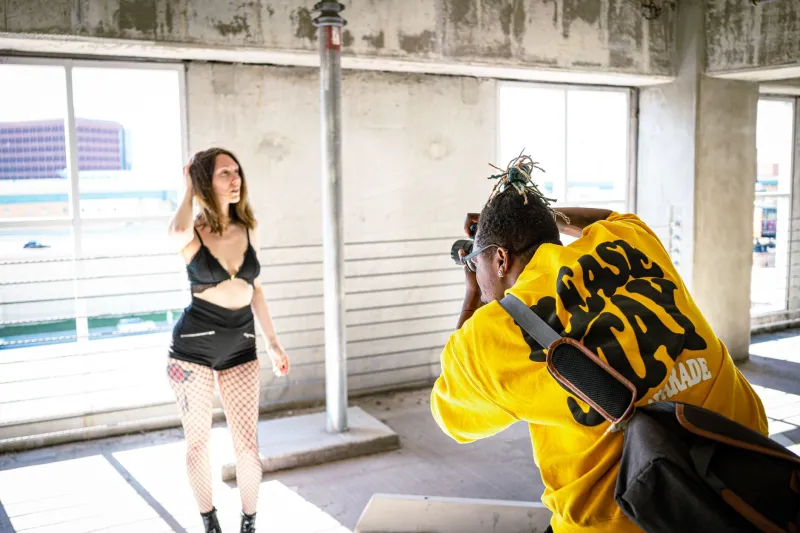
The abandoned factory, the rooftop with the skyline, the trendy loft borrowed from a friend of a friend — none of these are cleared just because you could physically get in. Trespassing charges are the floor; the real risk is liability if anyone gets hurt on a location nobody insured.
Real locations need real agreements: a signed location release, a certificate of insurance, and a walkthrough for hazards. Many cities also require permits for commercial photography in public spaces — New York, LA, and Chicago all have processes, and most are cheaper than you'd expect.
Rebel Smart, Not Rebel Careless
Here's the honest truth: the paperwork is not the enemy of the work. Every release signed and permit pulled is bandwidth you get back — no anxious legal review, no pulled campaign, no settlement call. The most defiant thing a creative team can do is build something that lasts, and lasting means owning the boring stuff.
Push the aesthetic boundaries. Break the visual rules. Just sign the forms first.
This is general information, not legal advice. For specific situations, talk to an attorney licensed in your state.